Expert Stove & Oven Repair in Walpole, MA
Appliance Repair for Homes & Businesses in Walpole, East Walpole, South Walpole, Sharon, Medfield, Massachusetts and Nearby Areas
Stove and Oven Repair in Walpole, Massachusetts, Appliance Repair Pros
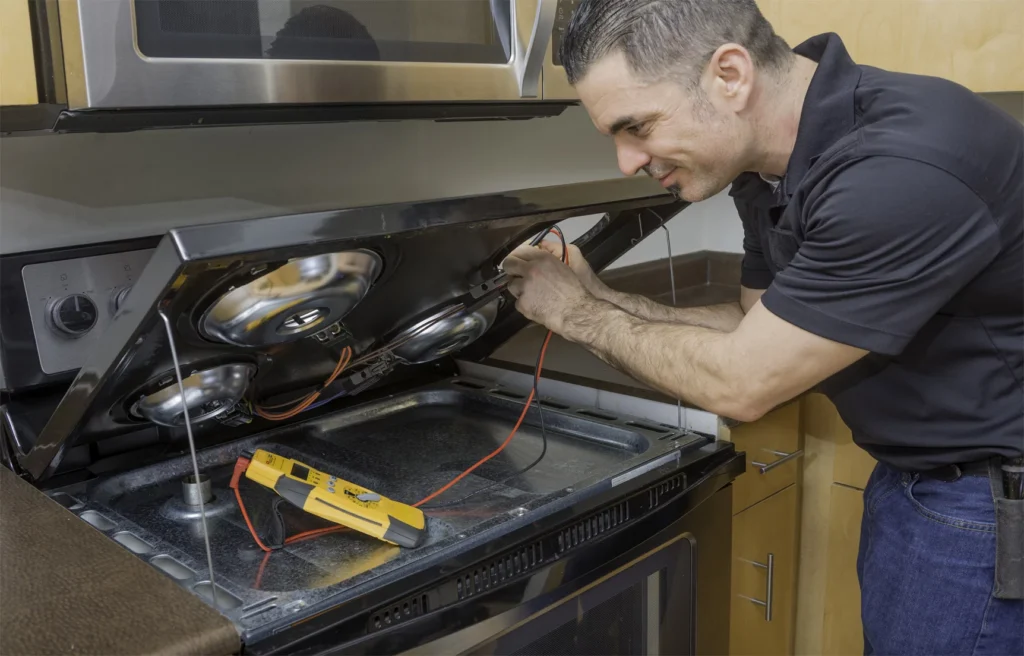
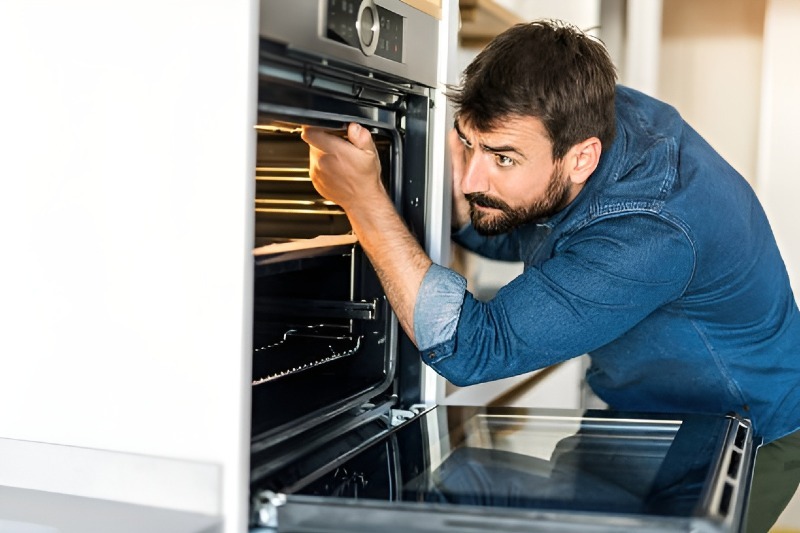
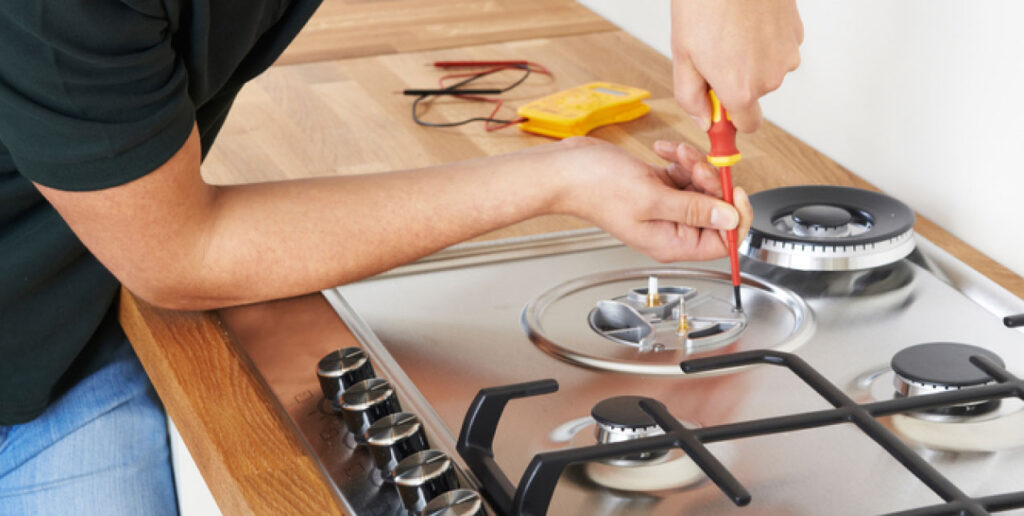
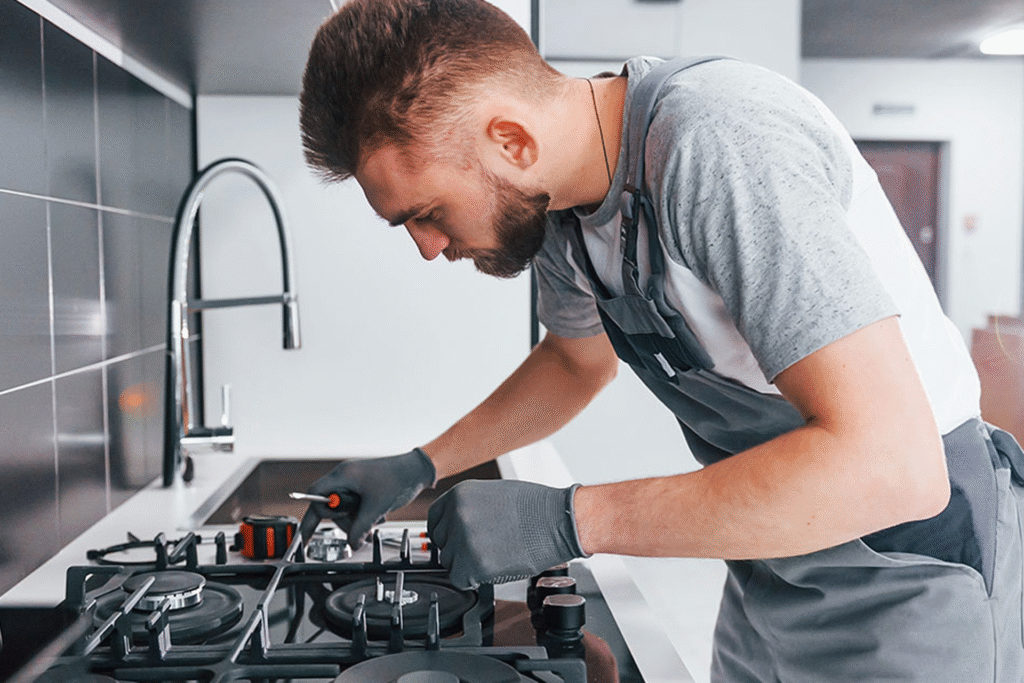
A broken stove or oven does more than just ruin dinner plans; it disrupts the heart of your home. Appliance Repair Pros offers specialized stove and oven repair services for homeowners in Walpole, East Walpole, Medfield, and Sharon. We help families who are dealing with ovens that won’t heat, burners that refuse to light, and cooktops that spark or click continuously. Whether you are preparing a holiday meal in a historic home near Walpole Common or just trying to get a weeknight dinner on the table in a Sharon condo, we know that cooking appliances are essential. We prioritize safety above all else, especially when dealing with gas lines and high voltage electrical connections. Our technicians perform careful diagnostics to identify the exact cause of the failure, ensuring a safe and lasting repair. We treat your kitchen with respect, keeping our workspace tidy and providing a schedule you can rely on. Reach out to us for assistance.
Stove, Range, and Oven Services in Walpole
Cooking appliances come in many configurations, from vintage gas ranges to modern induction cooktops. Each type requires a specific set of skills and tools to repair correctly. We are equipped to handle the full spectrum of kitchen cooking equipment found in local homes.
Cooking systems we work on
- Gas ranges and freestanding stoves
- Electric coil and smooth top ranges
- Built in single and double wall ovens
- Gas and electric cooktops
- Dual fuel ranges (gas cooktop with electric oven)
- Induction cooktops
- Slide in and drop in ranges
- Warming drawers
What makes oven and stove repair tricky
- High Voltage Electricity: Electric ovens run on 240 volts, which requires strict safety protocols during testing.
- Gas Safety: Working with natural gas or propane demands precision to prevent leaks and carbon monoxide issues.
- Electronic Control Boards: Modern ranges use complex computers to manage temperature, timers, and safety locks.
- Hidden Igniters: Accessing igniters often requires disassembling the entire floor of the oven or the back panel.
- Glass Components: Ceramic cooktops and door glass are fragile and require careful handling.
- Calibration: Temperature sensors must be perfectly calibrated for even baking results.
Common Oven and Stove Problems We Fix
Oven is not heating
This is the most common call we receive, especially during the holidays. You turn the oven on, the light comes on, but the inside stays cold. This can happen in both gas and electric units, though the causes are different.
Likely causes
- Weak or broken gas igniter (glow bar)
- Burned out bake element (electric)
- Tripped thermal fuse or safety thermostat
- Failed control board relay
- Broken wire in the high voltage circuit
How we diagnose it
For gas ovens, we observe the igniter to see if it glows but fails to open the safety valve. For electric ovens, we test the element for continuity and verify that the control board is sending the correct voltage when the bake cycle is selected.
What you can do right now
Check your circuit breaker. Electric ovens run on a double breaker, and sometimes one side trips while the other stays on, leaving the lights working but the heat off.
Gas burner will not light
A surface burner that clicks but won’t ignite is frustrating and can be dangerous if gas builds up. This is often a maintenance issue but can also point to a spark module failure.
Likely causes
- Clogged burner ports (food spills)
- Wet igniter ceramic after cleaning
- Cracked spark electrode
- Failed spark module
- Defective burner switch harness
How we diagnose it
We listen for the clicking sound and look for a strong blue spark. We check the gas flow to the burner and inspect the ignition switches behind the knobs to ensure they are completing the circuit.
What you can do right now
Clean the metal burner cap and the base. Use a stiff toothbrush or a paper clip to clear any food debris from the small holes (ports) around the burner head.
Electric cooktop element not working
On a glass top stove or coil range, having one burner out limits your cooking capacity. This can be caused by the element itself or the switch controlling it.
Likely causes
- Burned out ribbon element (glass top)
- Broken coil element
- Damaged receptacle block (where the coil plugs in)
- Failed infinite switch (the knob control)
- Loose wire connection
How we diagnose it
We test the resistance of the element to see if the internal wire is broken. If the element is good, we test the switch to see if it is regulating power correctly to the burner.
What you can do right now
For coil tops, try swapping the non working burner with a working one of the same size. If it works in the new spot, the issue is the receptacle or switch, not the coil.
Oven temperature is incorrect or uneven
If your cookies are burning on the bottom or your roasts are raw in the middle, your oven calibration is likely off. In older Walpole homes, voltage fluctuations can sometimes play a role, but usually, it is an internal component.
Likely causes
- Drifting temperature sensor (thermostat)
- Failed convection fan motor
- Blocked airflow (using foil on the bottom)
- Weak igniter taking too long to cycle gas on
- Control board losing calibration
How we diagnose it
We test the resistance of the temperature sensor at room temperature. We also check the convection fan operation to ensure heat is circulating. We may inspect the door seal to ensure heat isn’t escaping.
What you can do right now
Remove any aluminum foil from the bottom of the oven or the racks. Foil blocks airflow and reflects heat, causing hot spots that ruin food.
Oven door is stuck locked
This typically happens after a self clean cycle. The heat locks the door for safety, but sometimes the latch motor fails or the sensor gets damaged, leaving your dinner trapped inside or the oven unusable.
Likely causes
- Failed door lock motor assembly
- warped latch hook
- Control board not sending the unlock signal
- High limit thermostat tripped
How we diagnose it
We access the lock assembly, usually from the back or top, to manually release it if possible. We verify if the lock motor is receiving power and if the switches are signaling the correct position.
What you can do right now
Wait at least one hour after the cycle ends to let the unit cool down completely. Try gently pressing the door in while hitting the “Clear/Off” button to relieve pressure on the latch.
Smell of gas
A gas smell near your stove is a serious safety concern. It can stem from a leak in the flexible supply line, a valve that isn’t closing fully, or an ignition failure.
Likely causes
- Leaking safety valve
- Loose connection at the wall or regulator
- Surface burner valve left slightly open
- Failed igniter letting gas flow too long before lighting
How we diagnose it
We use electronic gas detectors and leak detection solution on all fittings. We observe the ignition timing to ensure the flame lights immediately when gas is released.
What you can do right now
If the smell is strong, leave the house immediately and call your gas utility or fire department. If it is faint, ensure all knobs are in the “Off” position.
Glass cooktop is cracked
Heavy pots dropped on a ceramic cooktop can cause cracks. While the burners underneath might still work, using a cracked top is dangerous due to the risk of electrical shock and further breakage.
Likely causes
- Impact from heavy cookware
- Thermal shock (cold water on a hot surface)
- Overtightening mounting screws
How we diagnose it
Visual inspection confirms the crack. We must check underneath to ensure no liquid has leaked onto the electrical components below.
What you can do right now
Stop using the cooktop immediately. Do not cook on a cracked surface as liquids can seep through and cause a short circuit or fire.
Control panel is unresponsive or beeping
Ghost touches, random beeping, or buttons that don’t work usually indicate an issue with the electronic control board or the touch overlay.
Likely causes
- Short in the membrane switch (touchpad)
- Control board failure
- Loose ribbon cable connection
- Child lock activated
How we diagnose it
We test the ribbon cable connection. If some buttons work and others don’t, it is usually the membrane. If the display is dead, we check power input to the main board.
What you can do right now
Check if “Loc” or a padlock icon is lit up on the display. Press and hold the lock button for 3 seconds to deactivate the child lock.
Safety Notes for Stove and Oven Issues
Repairing cooking appliances involves navigating serious hazards. Gas ranges connect directly to a fuel source, and electric ranges use high voltage power that can be lethal. Homeowners in Medfield and Walpole often have older gas infrastructure or unique wiring setups that require extra caution.
- If you smell gas: Do not turn any lights on or off. Do not use the phone in the kitchen. Evacuate the home and call the gas company or emergency services from a safe distance.
- If you see sparks: Turn off the range at the circuit breaker immediately. Do not throw water on an electrical fire.
- If the glass top cracks: Disconnect power to the unit to prevent shock hazards from spills seeping into the electronics.
- If the oven won’t stop heating: This is a “runaway temperature” situation. Turn off the breaker to cut power to the element, as the controls may not respond.
Brands We Service for Stove and Oven Repair in Walpole
Every brand designs their ignition and heating systems differently. We carry the knowledge and the diagnostic tools to handle the specific quirks of each manufacturer.
Whirlpool family (Whirlpool, Maytag, KitchenAid, JennAir)
These are the workhorses of many Walpole kitchens. They typically use a glow bar igniter for gas ovens and simple, reliable elements for electric ones. However, the direct spark ignition systems on their cooktops can be sensitive to moisture.
- Common issues we see: Weak igniters causing slow heating, control board relays failing (oven won’t heat), spark modules clicking continuously.
We verify the amperage draw on their glow bars because even if it glows, it might not be pulling enough current to open the gas valve.
GE family (GE, Hotpoint, Cafe, Profile)
GE ranges are very common and generally easy to service. Their newer Cafe and Profile lines have advanced features like air fry and intricate touch controls. The older XL44 series is legendary for durability but often needs new igniters.
- Common issues we see: Broken igniters, failed sensors causing F3 codes, keypad ribbons wearing out, infinite switch failures.
GE ovens often use a specific calibration for their sensors. We test these against the tech sheet specifications to ensure accuracy.
Samsung and LG
These brands offer sleek designs and high tech features like dual door ovens. However, their reliance on complex electronics means that repair often involves troubleshooting printed circuit boards (PCBs) and weak convection fans.
- Common issues we see: Uneven baking due to fan failure, control panel touch issues, long preheat times, relay board failures.
Samsung gas ranges are known for igniter failures that can mimic a control board issue. We perform thorough testing to distinguish between the two.
Frigidaire and Electrolux
Frigidaire produces many of the induction and electric ranges found in local condos. They are efficient but can suffer from surface element failures and overlay peeling issues.
- Common issues we see: Surface elements burning out, F1 error codes (control board), probe jacks shorting out.
We often find that the thermal limiter on their heating elements can trip, requiring a specific continuity test to identify.
Bosch and Thermador
These premium brands require a higher level of technical skill. They often use complex sequencers for their burners and simmer controls (XLO feature) that click on and off to maintain low heat.
- Common issues we see: Simmer control modules failing, display dimming, potentiometer (knob) failures.
Repairing these units requires patience and access to specific service manuals, which our team utilizes for every job.
Premium Brands (Wolf, Viking, Sub Zero)
For high end professional style ranges, we offer specialized diagnostics. These units use heavy duty components and often have unique ignition systems like spark re ignition modules.
- Common issues we see: Spark module failure, door hinge problems due to heavy doors, thermostat calibration.
We respect the investment you have made in these appliances and use the correct grade of parts to maintain their performance.
Brands We Service for Stove and Oven Repair in Walpole
Every brand designs their ignition and heating systems differently. We carry the knowledge and the diagnostic tools to handle the specific quirks of each manufacturer.
Whirlpool family (Whirlpool, Maytag, KitchenAid, JennAir)
These are the workhorses of many Walpole kitchens. They typically use a glow bar igniter for gas ovens and simple, reliable elements for electric ones. However, the direct spark ignition systems on their cooktops can be sensitive to moisture.
- Common issues we see: Weak igniters causing slow heating, control board relays failing (oven won’t heat), spark modules clicking continuously.
We verify the amperage draw on their glow bars because even if it glows, it might not be pulling enough current to open the gas valve.
GE family (GE, Hotpoint, Cafe, Profile)
GE ranges are very common and generally easy to service. Their newer Cafe and Profile lines have advanced features like air fry and intricate touch controls. The older XL44 series is legendary for durability but often needs new igniters.
- Common issues we see: Broken igniters, failed sensors causing F3 codes, keypad ribbons wearing out, infinite switch failures.
GE ovens often use a specific calibration for their sensors. We test these against the tech sheet specifications to ensure accuracy.
Samsung and LG
These brands offer sleek designs and high tech features like dual door ovens. However, their reliance on complex electronics means that repair often involves troubleshooting printed circuit boards (PCBs) and weak convection fans.
- Common issues we see: Uneven baking due to fan failure, control panel touch issues, long preheat times, relay board failures.
Samsung gas ranges are known for igniter failures that can mimic a control board issue. We perform thorough testing to distinguish between the two.
Frigidaire and Electrolux
Frigidaire produces many of the induction and electric ranges found in local condos. They are efficient but can suffer from surface element failures and overlay peeling issues.
- Common issues we see: Surface elements burning out, F1 error codes (control board), probe jacks shorting out.
We often find that the thermal limiter on their heating elements can trip, requiring a specific continuity test to identify.
Bosch and Thermador
These premium brands require a higher level of technical skill. They often use complex sequencers for their burners and simmer controls (XLO feature) that click on and off to maintain low heat.
- Common issues we see: Simmer control modules failing, display dimming, potentiometer (knob) failures.
Repairing these units requires patience and access to specific service manuals, which our team utilizes for every job.
Premium Brands (Wolf, Viking, Sub Zero)
For high end professional style ranges, we offer specialized diagnostics. These units use heavy duty components and often have unique ignition systems like spark re ignition modules.
- Common issues we see: Spark module failure, door hinge problems due to heavy doors, thermostat calibration.
We respect the investment you have made in these appliances and use the correct grade of parts to maintain their performance.
Common Oven Error Codes and What They Mean
If your oven beeps and displays a code, it is trying to tell you which system has failed. However, codes are just a guide and require testing to confirm the root cause.
F1 or F7 Code: usually indicates a problem with the control board or the membrane pad (keypad). It often means a button is stuck or a relay has fused.
F3 or F10 Code: This typically points to a runaway temperature or a sensor failure. The oven thinks it is too hot or the sensor is open (broken wire).
F9 Code: This is a door lock circuit error. The oven thinks the door is locked when it shouldn’t be, or vice versa. It often prevents the oven from running.
F0 or F- Code: On some models, this indicates a stuck key on the touchpad.
Maintenance Tips for Stove Owners in Walpole
Keeping your range in top shape requires regular attention. Here are some tips to help you avoid a service call.
Clean spills immediately: Tomato sauce, lemon juice, and sugary spills are acidic. If left on the enamel floor of the oven, they can eat through the finish, leading to rust and holes in the cavity liner.
Don’t use foil on the bottom: We see this often in Walpole. Putting foil on the bottom of a gas oven blocks airflow and can cause carbon monoxide buildup. On electric ovens, it can fuse to the element and cause a short.
Clean burner ports regularly: If your gas flame is yellow or uneven, the ports are likely clogged. Use a paper clip or safety pin to gently clear the holes. Do not use a wooden toothpick, as it can break off inside.
Check the door seal: The rubber or fiberglass gasket around the door keeps heat in. If it is torn or hanging loose, heat escapes, damaging the control knobs and increasing cooking times.
Use Self Clean cautiously: The self clean cycle gets the oven extremely hot (over 900 degrees). This puts stress on the electronics and heating elements. We recommend avoiding this feature right before a major holiday to prevent a breakdown at the worst time.
Dry the bottom of pots: Before placing a pot on a glass cooktop, wipe the bottom dry. Water trapped between the pot and the glass can boil and leave mineral rings that are hard to remove.
Service Area for Stove and Oven Repair in and Around Walpole, Massachusetts
We are a local team dedicated to serving the families of Norfolk County. We travel the local roads daily, from the neighborhoods near Walpole High School to the quiet streets of South Walpole. Our service area includes:
- Walpole
- East Walpole
- South Walpole
- Medfield
- Sharon
- Norwood
- Norfolk
- Westwood
- Foxborough
Zip codes we serve: 02081, 02032, 02071, 02052, 02067, 02062, 02056, 02035, 02090
Frequently Asked Questions
My gas oven takes a long time to heat up. Is this normal?
A gas oven should reach 350 degrees in about 10 to 15 minutes. If it is taking 30 minutes or more, you likely have a weak igniter. The igniter must get hot enough to open the gas valve. As they age, they get weaker and take longer to open the valve, resulting in slow heating. This is a common repair we perform.
Can you replace just the glass on my cooktop?
Yes, the glass top can be replaced, but it is often the most expensive part of the range. We can check the availability and price of the glass for your specific model so you can decide if it is worth repairing or if replacing the unit is a better investment.
Why does my oven smell like gas when I turn it on?
A small puff of gas smell right when the burner ignites is normal. However, if the smell persists or is strong, it means the igniter is taking too long to light the gas, or there is a small leak. This should be addressed immediately for safety.
Is it safe to use the self clean feature?
While the feature is designed to be safe, the extreme heat can stress older components. It can blow thermal fuses or damage control boards. We recommend cleaning spills by hand with mild cleaners whenever possible and using the self clean feature sparingly.
Do you repair induction cooktops?
Yes, we repair induction units. These require specialized knowledge as they use magnetic fields and high frequency electronics to heat the pan. Common issues involve the power board or the user interface.
Why is my electric burner sparking?
Sparking usually indicates a short circuit. It typically happens when a coil element burns through or when the receptacle block (where the element plugs in) has melted or corroded. Turn off the burner immediately and do not use it until it is repaired.
What should I do before the technician arrives?
Please insure the stove is cool to the touch. Remove any pots, pans, or baking sheets from the oven and the cooktop. If you have pets, please secure them in another room. Ensure there is clear access to the appliance.
Is there a stove repair service near me?
Yes, we are based locally in the Walpole area and serve the surrounding communities like Sharon and Medfield. We are your neighbors and are committed to providing timely, local service.
Why is my convection fan making noise?
A noisy fan usually means the bearings in the motor are worn out, or the fan blade has become loose and is hitting the cover. It can also be caused by grease buildup. We can inspect the fan and replace the motor if necessary to restore quiet operation.
Can you calibrate my oven temperature?
Yes. If your oven is consistently running hot or cool, we can often adjust the calibration through the control board settings. We use a digital thermocouple to measure the actual internal temperature and match the oven display to reality.
Conclusion
At Appliance Repair Pros, we understand that a functional stove and oven are vital for a happy home and healthy meals. We bring technical expertise, safety awareness, and local knowledge to every job in Walpole, Medfield, Sharon, and East Walpole. Whether you have a vintage gas range or a modern high tech wall oven, our team is ready to diagnose the issue and provide a lasting solution. Don’t let a broken appliance disrupt your dinner plans. Contact us today.